Author: mate_career

  • Golden Visa Europe 2026: Countries Offering Affordable Residency by Investment From Hungary to Cyprus: Where You Can Still Get a European Golden Visa

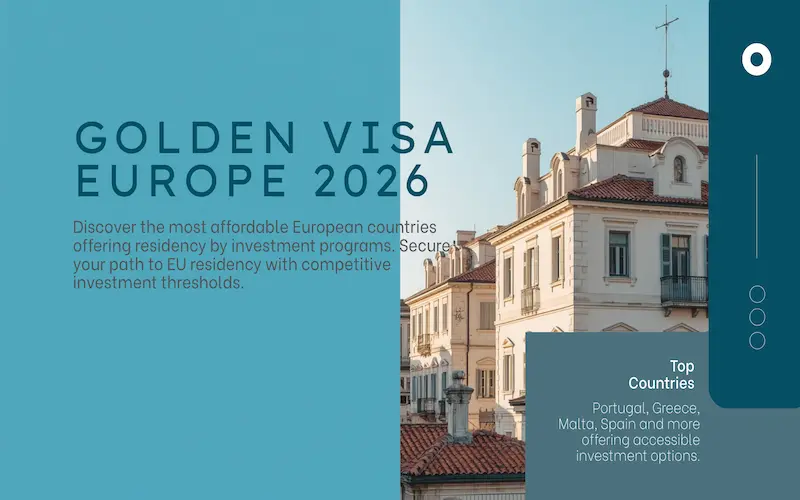
    Golden Visa Europe 2026: Countries Offering Affordable Residency by Investment From Hungary to Cyprus: Where You Can Still Get a European Golden Visa

    As several countries tighten regulations on residency-by-investment schemes, a number of European nations—including Hungary, Greece, Cyprus, Italy, and Portugal—continue to offer golden visas in 2026 at relatively affordable investment levels.

    With rising property prices, global uncertainty, and shifting immigration policies, more individuals are exploring European residency options that provide flexibility, security, and long-term benefits.


    Why Golden Visas Are Gaining Popularity in 2026

    The average UK house price has climbed to approximately £301,000 (€347,776), prompting buyers to look for better value abroad. At the same time, traditional visa routes remain complex, expensive, and time-consuming.

    Golden visa programmes offer a faster alternative, allowing non-EU nationals to gain residency through investment—often without strict stay requirements.

    According to legal experts, demand is shifting:

    “It’s no longer just about a holiday home—it’s about security and freedom. A second residency is now seen as a long-term safety net.”

    Top European Countries Offering Golden Visas

    Hungary Golden Visa

    Hungary’s Guest Investor Program (GIP) is among the most affordable in Europe, requiring a minimum investment of €250,000.

    • 10-year residency (renewable)
    • No minimum stay requirement
    • Path to permanent residency in 3 years
    • Citizenship possible after 8 years

    Investments include real estate funds or a €1 million educational donation. Hungary’s cost of living is around 40% lower than the UK.


    Greece Golden Visa

    Greece remains a popular destination with a starting investment of €250,000 for select pathways.

    • Options include property restoration or conversion
    • 5-year residency (renewable)
    • No minimum stay requirement
    • Citizenship after 7 years

    The country offers a lower cost of living and strong lifestyle appeal.


    Cyprus Golden Visa

    Cyprus provides permanent residency with a €300,000 investment.

    • Covers spouse and dependent children
    • Minimal stay requirement (once every 2 years)
    • Citizenship after 7 years

    Its legal transparency, tax benefits, and Mediterranean lifestyle make it highly attractive.


    Italy Golden Visa

    Italy offers flexible investment routes starting from €250,000.

    • Investment in startups, companies, or government bonds
    • 2-year renewable residency
    • No minimum stay requirement
    • Citizenship after 10 years

    Italy combines residency benefits with rich culture and lifestyle advantages.


    Portugal Golden Visa

    Portugal remains competitive despite removing real estate investment options.

    • Starting from €250,000 (or €200,000 in low-density areas)
    • Investment in cultural or development projects
    • Minimal stay requirement (around 7 days/year)
    • Citizenship eligibility after 5 years

    Portugal continues to attract investors with its climate, safety, and quality of life.


    Key Things to Consider Before Applying

    Before choosing a golden visa programme in Europe, applicants should consider:

    • Additional costs: Legal fees, taxes, and insurance
    • Regulatory changes: Programmes may evolve or close
    • Tax implications: Residency vs tax residency differences
    • Investment security: Ensure long-term protection of your rights

    Conclusion

    While golden visa programmes in Europe are becoming more regulated, several countries still offer affordable and flexible residency-by-investment options in 2026.

    For investors seeking mobility, security, and access to Europe, these programmes remain a valuable pathway—provided careful planning and due diligence are undertaken.


  • Ultimate Guide: How to Apply for a Latvia Visa in 2026

    Ultimate Guide: How to Apply for a Latvia Visa in 2026

    Are you planning a trip to the “Jewel of the Baltics”? Whether you’re heading to the historic streets of Riga for tourism, enrolling in a top-tier university, or starting a new career, navigating the Latvia visa application process is your first step.

    This comprehensive guide breaks down everything you need to know about applying for a Latvia visa, from document checklists to processing times and expert tips for approval.


    1. Determine Your Latvia Visa Type

    Before you start your application, you must identify which visa category fits your travel plans. Latvia offers two primary types:

    • Schengen Visa (Type C): For short stays up to 90 days within a 180-day period. This is ideal for tourism, business meetings, or visiting family and friends.
    • National Visa (Type D): For long stays exceeding 90 days (up to one year). This is required for international students, long-term employment, or residence permit applicants.

    2. Essential Document Checklist for 2026

    While specific requirements vary by visa type, all applicants must provide these core documents:

    • Valid Passport: Must have at least two blank pages, be issued within the last 10 years, and remain valid for at least 3 months beyond your intended departure.
    • Online Application Form: Must be completed via the Official Latvian Visa E-Service, printed, and signed.
    • Recent Photographs: Provide two color photos (35mm x 45mm) taken against a light, plain background within the last 6 months.
    • Travel Medical Insurance: Must cover at least €30,000 for Type C visas or €42,600 for Type D visas, including emergency medical care and repatriation.
    • Proof of Financial Means: Last 3 months of bank statements. For short-term stays, you generally need to prove at least €14 per day of stay.
    • Flight & Accommodation Proof: Confirmed round-trip flight bookings and hotel reservations or a letter of invitation from a host in Latvia.

    Special Requirements for Students and Employees

    • For Students: An invitation approved by the Office of Citizenship and Migration Affairs (OCMA), a signed study agreement, and proof of tuition payment.
    • For Employees: A signed employment contract and an OCMA-approved invitation from your Latvian employer.

    3. Step-by-Step Application Process

    Follow these steps to ensure a smooth application experience:

    1. Complete the Online Form: Fill out the Latvia Visa Form carefully. Errors can lead to immediate rejection.
    2. Schedule an Appointment: Book your slot at a VFS Global Center or the nearest Latvian Embassy.
    3. Attend the Interview & Provide Biometrics: Visit the center in person to submit your file and provide fingerprints and a digital photo (unless done in the last 5 years).
    4. Pay the Visa Fee:
      • Short-stay (Type C): €90 for adults; €45 for children aged 6–12.
      • Long-stay (Type D): Standard fees apply, often around €90 depending on the country of application.
    5. Track Your Status: Use the VFS Tracking Tool to stay updated on your passport’s progress.

    4. Processing Time and Fees

    • Standard Processing: Usually takes 10–15 working days.
    • Peak Season: During summer or holidays, processing can extend to 30–60 days, so apply at least 45 days in advance.

    5. Why Applications Get Rejected (and How to Avoid It)

    • Incomplete Documentation: Always use the official VFS Tourist Checklist to double-check your file.
    • Insufficient Funds: Ensure your bank statements clearly show you can support yourself without working illegally.
    • Invalid Insurance: Only use insurers recognized by Schengen authorities that meet the minimum coverage requirements.

    Ready to start your Latvian adventure? Our experts can help you review your documents and book your appointment. Contact us today for a hassle-free Latvia visa experience!

  • How to Apply for an Estonia Visa in 2026: A Complete Step-by-Step Guide for Foreigners

    How to Apply for an Estonia Visa in 2026: A Complete Step-by-Step Guide for Foreigners

    Whether you’re dreaming of the medieval charm of Tallinn’s Old Town or looking to join Estonia’s world-class tech ecosystem, securing the right visa is your first step. As a member of the Schengen Area, Estonia offers streamlined processes for both short-term tourists and long-term professionals.

    This comprehensive guide breaks down everything you need to know about the Estonia visa application process, requirements, and fees for 2026.


    1. Identify Your Visa Type: Schengen (C) vs. National (D)

    Before you start your application, you must determine which category fits your travel plans.

    Short-Stay Schengen Visa (Type C)

    • Purpose: Tourism, business meetings, or visiting family.
    • Duration: Up to 90 days within any 180-day period.
    • Scope: Grants access to all 27 Schengen countries.

    Long-Stay National Visa (Type D)

    • Purpose: Long-term work, study, or digital nomadism.
    • Duration: Up to 365 days within a 12-month period.
    • Scope: Primary residence in Estonia, with limited travel (90 days) to other Schengen states.

    2. Essential Estonia Visa Requirements

    While specific documents vary by purpose, all foreigners must provide these core items:

    • Valid Passport: Must be issued within the last 10 years, have at least two blank pages, and remain valid for at least 3 months after your intended departure from the Schengen area.
    • Online Application Form: Must be completed, printed, and hand-signed.
    • Recent Photographs: Two identical color photos (35x45mm) taken within the last 6 months against a light background.
    • Travel Medical Insurance: Minimum coverage of €30,000, valid across the entire Schengen Area for your full stay.
    • Proof of Subsistence: You must demonstrate you have sufficient funds.
      • General Requirement: €70 per day of stay.
      • Digital Nomad Visa: Approximately €4,500 gross monthly income.
      • Student/Work: Specific thresholds apply, such as €800/month for students or €1,200 for short-term work.

    3. The Step-by-Step Application Process

    Follow these five steps to ensure a smooth application experience.

    Step 1: Complete the Online Form

    Visit the official Estonian Ministry of Foreign Affairs portal to fill out your electronic application. Be precise; errors can lead to delays or rejections.

    Step 2: Book Your Appointment

    Most applications are handled through VFS Global or an Estonian Embassy. You must book an appointment in person to submit your documents and provide biometric data (fingerprints).

    Step 3: Prepare Your Supporting Documents

    Gather documents specific to your trip:

    • Tourists: Flight reservations and hotel bookings.
    • Workers: A signed employment contract and employer registration in Estonia.
    • Students: An acceptance letter from an Estonian university.

    Step 4: Pay the Visa Fee

    Fees are generally paid at the application center or embassy:

    • Schengen (C) Visa: €90 for adults; €45 for children (6-12).
    • National (D) Visa: Approximately €100.

    Step 5: Wait for Processing

    Standard processing for a Schengen visa is about 15 calendar days. Long-stay D-visas can take 2 to 4 weeks, depending on the complexity of your background checks.


    4. Pro-Tips for a Successful Application

    • Apply Early: You can apply up to 6 months before your trip. We recommend applying at least 4-6 weeks in advance to account for peak seasons.
    • E-Residency Factor: If you are an entrepreneur, consider applying for Estonia’s E-Residency. While it is not a travel visa, it allows you to manage an EU business remotely, which can strengthen your business visa profile.
    • Check Local Representation: If Estonia does not have an embassy in your country, another Schengen member state might represent them for short-term visas.

    Ready to start your Estonian journey? Ensure your documents are in order and book your appointment today through the official VFS Global site.

    Do you need a customized document checklist based on your specific nationality or current employment status?

  • The Ultimate Guide to Applying for a Germany Visa: A Step-by-Step Roadmap

    The Ultimate Guide to Applying for a Germany Visa: A Step-by-Step Roadmap

    Germany, the heart of Europe, offers unparalleled opportunities for travelers, students, and professionals alike. Whether you’re dreaming of exploring Bavarian castles, studying at world-class universities, or advancing your career in a powerhouse economy, securing the right visa is your first step.

    This comprehensive guide breaks down the German visa application process into clear, actionable steps to help you navigate the bureaucracy with confidence.


    Phase 1: Identifying the Right Visa Category

    Before you fill out a single form, you must determine which visa fits your intent. German visas are broadly split into two categories:

    1. Schengen Visa (Short-Stay / Type C)

    • Duration: Up to 90 days within a 180-period.
    • Best for: Tourism, visiting family/friends, short business trips, or brief training courses.
    • Key Feature: Allows free movement across all 29 Schengen Area countries.

    2. National Visa (Long-Stay / Type D)

    • Duration: Longer than 90 days.
    • Best for: University studies, employment, vocational training, or family reunification.
    • Key Feature: This is a residence permit pathway. If you intend to live in Germany, this is the one you need.

    Phase 2: Gathering Your Documentation

    Documentation is the most critical part of your application. The German consulate requires a precise set of “clean” documents. Ensure you have the following:

    • Valid Passport: Must be valid for at least three months beyond your planned departure from the Schengen area and have at least two blank pages.
    • Biometric Photos: Two recent identical photos (35mm x 45mm) with a neutral facial expression and a light-colored background.
    • The VIDEX Application Form: For most applicants, the VIDEX online portal is the standard way to complete your application. Print the completed form and the generated barcodes.
    • Travel Health Insurance: For Schengen visas, you need a policy with a minimum coverage of €30,000, valid for all Schengen states and covering emergency medical expenses and repatriation.
    • Proof of Financial Subsistence: Recent bank statements (last 3-6 months) showing you have sufficient funds to cover your stay.
    • Proof of Accommodation: Hotel bookings, a rental agreement, or a formal letter of invitation (Verpflichtungserklärung) from a host in Germany.
    • Flight Itinerary: Round-trip flight reservations (it is often advised not to buy the full ticket until the visa is approved).

    Phase 3: The Application Process

    1. Fill Out the VIDEX Form

    Accuracy is paramount. Ensure your name matches your passport exactly. Any discrepancy can lead to delays or rejection.

    2. Book Your Appointment

    In most countries, Germany outsources its visa processing to VFS Global.

    • Visit the official VFS Global Germany website for your specific region.
    • Create an account and schedule your appointment at the nearest Visa Application Centre (VAC).

    3. Attend the Interview & Submit Biometrics

    On the day of your appointment:

    • Arrive Early: Security checks can take time.
    • Submission: Submit your physical file.
    • Biometrics: You will provide fingerprints and a digital photo (if not done in the last 59 months).
    • Fees: Pay the visa fee. A standard Schengen visa fee is typically €90, while National visas are generally €75 (though rates may vary based on local currency and service charges).

    Phase 4: Processing and Collection

    Once submitted, your application is forwarded to the German Consulate or Embassy.

    • Processing Time: Schengen visas usually take 10 to 15 working days. National visas (work/study) can take anywhere from a few weeks to several months due to the involvement of local authorities in Germany (Ausländerbehörde).
    • Tracking: You can usually track your application status via the VFS website using your reference number.

    Pro-Tips for a Successful Application

    1. Apply Early: You can apply up to six months before your intended travel date. Do not wait until the last minute!
    2. Check for Specific Checklists: Depending on your country of residence, the German Embassy may have “Local Specifications.” Always download the specific checklist from the official Embassy website.
    3. No Staples: German consulates generally prefer documents to be organized in folders without staples or paperclips unless specified otherwise.
    4. Be Honest: Never provide forged documents. A “Visa Warning” on your record can lead to a long-term ban from the entire Schengen Area.

    Conclusion

    Applying for a German visa requires patience and meticulous organization, but the reward of experiencing Germany’s rich culture and economic opportunities is well worth the effort. By following this guide and ensuring your documentation is flawless, you significantly increase your chances of a “Visa Granted” stamp.

  • The Ultimate Guide to Slovakia Visa for Foreigners (2026 Update)

    The Ultimate Guide to Slovakia Visa for Foreigners (2026 Update)

    Are you planning to explore the historic charm of Bratislava, hike the High Tatras, or pursue a career in one of Europe’s most dynamic economies? Slovakia, a landlocked gem in Central Europe, offers a wealth of opportunities for tourists, students, and professionals alike. However, as a member of the Schengen Area and the European Union, entering Slovakia requires careful adherence to specific visa protocols.

    This comprehensive guide breaks down everything you need to know about the Slovakia visa application process in 2026, from selecting the right visa type to mastering the documentation.


    1. Do You Need a Visa for Slovakia?

    Your nationality and the length of your stay determine whether you need a visa:

    • Visa-Exempt Nationals: Citizens from the US, UK, Canada, Australia, and over 60 other countries can enter for tourism or business for up to 90 days within a 180-day period without a visa.
    • Schengen Visa Required: Citizens of countries like India, China, and many African/Asian nations must obtain a Schengen visa before arrival for any stay duration.
    • ETIAS (Late 2026): Starting in late 2026, visa-exempt travelers will need to obtain an (€7 fee for ages 18–70) before their trip.

    2. Types of Slovakia Visas

    Slovakia offers two primary categories based on the duration and purpose of your stay:

    A. Short-Term Schengen Visa (Type C)

    • Duration: Up to 90 days in a 180-day period.
    • Best for: Tourism, family visits, short business meetings, or brief medical treatments.
    • Flexibility: Allows travel across all 29 Schengen member states.

    B. National Visa (Type D)

    • Duration: More than 90 days, up to one year.
    • Best for: Long-term employment, university studies, or family reunification.
    • Requirement: Often serves as a precursor to applying for a Temporary Residence Permit once you arrive in Slovakia.

    3. Essential Document Checklist

    To ensure your application isn’t rejected (the global denial rate was roughly 13% in 2023), you must provide:

    1. Valid Passport: Issued within the last 10 years, with at least 2 blank pages, and valid for 3–6 months beyond your departure date.
    2. Completed Application Form: Can be filled out via the Slovakia Electronic Visa Request website.
    3. Recent Photos: Two biometric color photos (35x45mm) against a light background.
    4. Travel Medical Insurance: Minimum coverage of €30,000, valid for all Schengen states and including COVID-19 coverage.
    5. Proof of Solvency: Last 6 months of bank statements showing sufficient funds (approx. €56 per day of stay).
    6. Accommodation & Itinerary: Confirmed hotel bookings and a round-trip flight reservation.
    7. Purpose-Specific Docs:
      • Business: Invitation letter from a Slovak company.
      • Work: Signed employment contract and Labour Office vacancy confirmation.
      • Study: Enrollment certificate from a Slovak educational institution.

    4. How to Apply: Step-by-Step

    The application process is typically outsourced to partners like BLS International or VFS Global.

    1. Determine Your Jurisdiction: Apply at the mission or center serving your region of residence.
    2. Book an Appointment: Visit the BLS or VFS website to schedule your visit. Slots can fill up 2–4 weeks in advance.
    3. Attend & Submit Biometrics: You must appear in person to provide fingerprints and a digital photo (if not done in the last 59 months).
    4. Pay the Fees:
      • Schengen Visa (Adult): €90 (approx. ₹9,710).
      • Schengen Visa (Child 6–12): €45.
      • National Visa (Type D): €35 to €90 depending on specific purpose.
    5. Wait for Processing: Standard processing takes 15 working days, though it can extend to 45–60 days for complex cases.

    5. Pro Tips for a Successful Application

    • Apply Early: The earliest you can apply is 6 months before travel; 4–6 weeks ahead is the recommended minimum.
    • Check the “Main Destination” Rule: You must apply through Slovakia only if it is your primary destination or your first point of entry into the Schengen Area.
    • Professional Translation: Any documents not in Slovak or English should be professionally translated.

    Whether you’re visiting for a quick holiday or a new career, following these steps will help you navigate the Slovakian visa process with professional ease.

  • The Ultimate Portugal Visa Guide 2026: How to Apply as a Foreigner

    The Ultimate Portugal Visa Guide 2026: How to Apply as a Foreigner

    Planning a move to the sunny shores of the Algarve or the historic streets of Lisbon? Portugal has become one of Europe’s most sought-after destinations for travelers, digital nomads, and expats. However, navigating the Portugal visa application process can be daunting if you don’t have a clear roadmap.

    This comprehensive guide breaks down everything you need to know about applying for a Portugal visa in 2025—from choosing the right type to nailing your appointment at VFS Global.


    1. Which Portugal Visa Do You Need?

    Before you start gathering paperwork, you must identify your specific “entry category.” Applying for the wrong type is one of the most common reasons for rejection.

    Short-Stay (Schengen Visa – Type C)

    • Best for: Tourism, short business trips, or visiting family.
    • Duration: Up to 90 days within a 180-day period.
    • Scope: Allows travel across the entire Schengen Area, provided Portugal is your primary destination.

    National Long-Stay Visas (Type D)

    If you plan to stay longer than 90 days, you’ll need a National Visa. Popular options include:

    • D7 Visa: For retirees or those with recurring passive income.
    • D8 (Digital Nomad) Visa: Specifically for remote workers and freelancers.
    • D2 Visa: For entrepreneurs looking to start a business in Portugal.
    • Student Visa: For those enrolled in Portuguese educational institutions.

    2. Essential Document Checklist

    Consistency is key. Ensure the details on your application match your supporting evidence exactly.

    DocumentRequirement Details
    Valid PassportIssued within the last 10 years, valid for 3–6 months beyond your stay, and having at least 2 blank pages.
    Visa Application FormFully completed and signed in English or Portuguese.
    Passport PhotosTwo recent color photos (35x45mm) with a white background.
    Travel InsuranceMinimum coverage of €30,000 for medical emergencies and repatriation.
    Proof of FundsBank statements from the last 3–6 months showing sufficient “means of subsistence”.
    AccommodationConfirmed hotel bookings or a “Termo de Responsabilidade” (letter of responsibility) if staying with a host.
    Flight ItineraryRound-trip flight reservations.

    Pro Tip: If you are employed, you must provide a “No Objection Certificate” (NOC) from your employer stating your leave approval and salary details.


    3. Step-by-Step Application Process

    The process varies slightly depending on your country, but generally follows these five steps:

    Step 1: Book Your Appointment

    Most applications are handled through third-party centers like VFS Global or TLScontact. You must book your slot online and pay the mandatory service fee in advance.

    Step 2: Prepare Your “Cover Letter”

    A strong personal covering letter introduces you to the consulate. It should clearly state your purpose for visiting, your itinerary, and how you will support yourself financially.

    Step 3: Attend the Visa Application Center (VAC)

    On the day of your appointment:

    • Arrive at least 15 minutes early.
    • Submit your physical documents.
    • Provide biometric data (fingerprints and a digital photo).
    • Pay the visa fee (approx. €90 for adults).

    Step 4: Track Your Application

    Processing typically takes 15 working days, but can extend to 30 or 60 days during peak seasons. You can track your status through your VFS Global or TLScontact account.


    4. Avoiding Common Rejections

    In 2024, the Schengen rejection rate was approximately 16%, often due to avoidable paperwork errors.

    • Incomplete Documentation: Missing even one bank statement can trigger a rejection.
    • Insufficient Funds: Ensure you meet the minimum financial thresholds for your specific visa type.
    • Unclear Intent: If the consulate isn’t convinced you will return to your home country, they may deny the application.

    Final Thoughts

    Applying for a Portugal visa requires patience and precision. Start your process at least 4 to 6 weeks before your travel date to account for any delays.

    For official forms and the latest fee schedules, always refer to the Portuguese Ministry of Foreign Affairs or the VFS Global Portugal Portal.

  • Ultimate Guide to the Hungary Visa for Foreigners (2026 Edition)

    Ultimate Guide to the Hungary Visa for Foreigners (2026 Edition)

    Whether you are dreaming of Budapest’s thermal baths or planning a strategic business move into Central Europe, understanding the Hungary visa application process is your first priority. As a key member of the Schengen Area, Hungary offers various entry permits tailored to different travel needs. 

    This guide provides a deep dive into the latest requirements, fees, and step-by-step procedures to ensure your application is successful. 

    1. Choosing the Right Visa Category

    Hungary offers several visa types depending on your purpose and duration of stay. Selecting the wrong category is a leading cause of rejection. 

    Short-Stay Schengen Visas (Type C)

    These allow you to stay in Hungary and the broader Schengen Area for up to 90 days within a 180-day period.

    • Tourist Visa: For leisure travel and sightseeing.
    • Business Visa: For attending meetings, conferences, or signing contracts.
    • Family/Friend Visit Visa: For those visiting relatives or friends residing in Hungary.
    • Airport Transit Visa (Type A): Required for certain nationalities transiting through the international zone of a Hungarian airport.

    Long-Stay National Visas (Type D)

    Required if you intend to stay longer than 90 days for purposes such as work, study, or family reunification. These often serve as the first step toward a residence permit. 

    The “Golden Visa” (Guest Investor Program) [11]

    Launched in 2024, this program allows non-EU/EEA nationals to obtain a 10-year residence permit (extendable for another 10 years) by investing at least €250,000 in a real estate fund or donating €1,000,000 to a higher education institution.


    2. Hungary Visa Requirements: Detailed Checklist

    To avoid delays, ensure every document meets the current standards.

    Standard Documents (Required for All)

    • Valid Passport: Must be issued within the last 10 years, have at least two blank pages, and remain valid for at least 3 months after your intended exit from the Schengen Area.
    • Application Form: Must be fully completed and signed. Electronic forms are often preferred for clarity.
    • Passport Photos: Two recent color photos (35x45mm) with a plain white background. Your face should occupy 70–80% of the frame.
    • Travel Medical Insurance: Mandatory coverage of at least €30,000 for medical emergencies and repatriation across all Schengen states.
    • Flight Itinerary: Confirmed round-trip flight reservations.
    • Proof of Accommodation: Hotel bookings, rental agreements, or a formal invitation letter from a host.
    • Financial Means: Bank statements for the last 3–6 months, pay slips, and Income Tax Returns (ITR) for the last two years. 

    Purpose-Specific Requirements

    • For Business: An original invitation letter from the Hungarian partner and proof of ongoing business relations.
    • For Students: An official acceptance letter from a Hungarian university, proof of tuition payment, and evidence of English proficiency.
    • For Employees: A valid employment contract and a letter from the Hungarian employer.

    3. Step-by-Step Application Process

    Follow these steps to navigate the VFS Global or Embassy workflow:

    1. Preparation: Gather your documents at least 6–8 weeks before travel.
    2. Booking an Appointment: Schedule your visit via the VFS Global portal or the relevant consulate.
    3. Submission & Biometrics: Attend your appointment in person to submit documents and provide fingerprints.
    4. Fee Payment: Pay the visa fee (approx. €90 for adults, €45 for children aged 6–12) plus any service charges.
    5. Processing: Decisions typically take 15 calendar days, but can extend up to 45 days during peak seasons or for complex cases.

    4. Common Rejection Pitfalls and Tips

    Even a small mistake can lead to a refusal. Watch out for:

    • Inconsistent Itineraries: Ensure your hotel dates exactly match your flight dates.
    • Insufficient Proof of Return: You must prove “strong ties” to your home country (e.g., employment, property, or family) to show you won’t overstay.
    • Unverifiable Documents: Consulates often verify bank statements and employment letters. Never submit fraudulent papers.

    5. Frequently Asked Questions (FAQ)

    • Can I travel to other countries with a Hungary visa? Yes, a Type C Schengen visa allows travel across all 29 Schengen member states.
    • What is the minimum bank balance required? While there is no fixed amount, showing at least €50–70 per day of your stay is a recommended guideline.
    • Is an interview mandatory? Not always, but the consulate reserves the right to call any applicant for a personal interview. 

    SEO Meta Details for Your Website

    • Focus Keyword: Hungary visa for foreigners
    • Secondary Keywords: Hungary Schengen visa requirements 2026, Hungary visa fees, VFS Global Hungary, long-stay visa Hungary, Hungary golden visa requirements.
    • Meta Description: Master the Hungary visa application for foreigners. Our 2026 guide provides the full document checklist, fee updates, and expert tips for a successful Schengen visa.
  • How to Apply for a Lithuania Visa: The Ultimate Guide for Foreigners (2026)

    How to Apply for a Lithuania Visa: The Ultimate Guide for Foreigners (2026)

    Are you planning a trip to the “Land of Amber”? Whether you are drawn to the medieval charm of Vilnius, the moving history of the Hill of Crosses, or looking to start a new career in a booming European tech hub, securing your Lithuania visa is your first step.

    Navigating visa requirements can be daunting, but this comprehensive guide breaks down everything from choosing the right visa type to mastering your appointment at VFS Global.

    1. Identify Your Visa Type: Which One Do You Need?

    Before you start your application, you must determine which category fits your travel plans. Lithuania offers two primary visa types:

    • Schengen Visa (Type C): For short stays up to 90 days within a 180-day period. Use this for tourism, business meetings, family visits, or short-term medical treatment.
    • National Visa (Type D): For long stays exceeding 90 days (up to 12 months). This is required for international students, full-time employees, or those applying for a residence permit.

    2. Essential Document Checklist

    Consistency is key to a successful application. Ensure all your documents are in English or accompanied by an official translation.

    Mandatory Requirements:

    • Valid Passport: Must be valid for at least 3 to 6 months after your intended departure date and have at least two blank pages.
    • Application Form: Must be completed online via the official Migracija (MIGRIS) portal and printed. Hand-filled forms are generally not accepted.
    • Schengen-Compliant Photos: Two recent color photographs (35x45mm) with a plain white background.
    • Travel Medical Insurance: Minimum coverage of €30,000 valid across the entire Schengen Area.
    • Proof of Sustenance: Bank statements for the last 3–6 months. Typically, you should show around €50–€70 per day of your stay.
    • Travel Itinerary: Confirmed return flight tickets and hotel reservations.

    3. Step-by-Step Application Process

    Follow these steps to ensure nothing is missed:

    1. Fill the Online Form: Visit the Migracija website to complete the electronic form.
    2. Book an Appointment: Schedule your visit at a VFS Global Visa Application Centre or the Lithuanian Embassy. Note that biometrics (fingerprints and a digital photo) are mandatory for first-time applicants.
    3. Pay the Fees: The standard fee for a Schengen visa (Type C) for adults is €90 (as of mid-2024), plus a VFS service charge (approx. ₹1,800–₹2,000).
    4. Attend the “Interview”: While often just a document submission, an officer may ask questions about your trip purpose, ties to your home country, and financial stability.
    5. Track Your Application: Use the reference number on your receipt to monitor your status online via the VFS tracking portal.

    4. Processing Times: When to Apply?

    Standard processing for a Lithuania Schengen visa usually takes 15 calendar days. However, it can extend to 45 or 60 days during peak seasons (June–August) or if your case requires extra scrutiny.

    • Pro Tip: Always apply at least 3 to 4 weeks before your intended travel date to avoid delays.

    5. Top Tips for Visa Approval

    • Show Strong Ties: Proof of employment, property ownership, or family in your home country helps prove you intend to return.
    • Be Transparent: Never provide false information. A single discrepancy can lead to an immediate rejection and a possible ban from the Schengen area.
    • Check Your Insurance: Ensure your policy specifically mentions “Schengen Area” and includes medical repatriation.

  • The Ultimate 2026 Guide to Applying for a Serbia Visa: Requirements, Fees, and Expert Tips

    The Ultimate 2026 Guide to Applying for a Serbia Visa: Requirements, Fees, and Expert Tips

    Are you planning to explore the “Crossroads of Europe”? From the bohemian streets of Skadarlija in Belgrade to the peaceful monasteries of Fruška Gora, Serbia is becoming a top destination for tourists, digital nomads, and investors.

    However, navigating immigration rules can be daunting. As of 2026, Serbia has updated its electronic visa systems to make the process more efficient. This detailed guide covers everything a foreigner needs to know about the Serbia visa application process.


    1. Quick Check: Do You Actually Need a Visa?

    Before you start your paperwork, determine if you fall under the visa-exempt category.

    Visa-Free Entry (Up to 90 Days)

    Citizens of the European Union, UK, USA, Canada, Australia, and several other nations can enter Serbia with just a valid passport for up to 90 days within any 180-day period.

    The “Schengen/US/UK” Shortcut

    If you hold a valid multiple-entry visa or a residence permit from the Schengen Area, the UK, or the USA, you can enter, transit, and stay in Serbia for up to 90 days without a dedicated Serbian visa.

    • Pro-Tip: Your visa must be valid for the entire duration of your stay in Serbia.

    2. Understanding Serbian Visa Types (C vs. D)

    Choosing the wrong visa category is the #1 cause of application rejection.

    Visa C (Short-Stay Visa)

    • Purpose: Tourism, business meetings, conferences, or visiting family.
    • Duration: Valid for stays up to 90 days.
    • Restriction: You cannot legally work or apply for a residence permit while on a Visa C.

    Visa D (Long-Stay Visa)

    • Purpose: Employment, education, family reunification, or religious service.
    • Duration: Stays between 90 and 180 days.
    • Key Advantage: This is the mandatory “bridge” visa required if you plan to apply for a Temporary Residence Permit (Boranavak) once you arrive in Serbia.

    3. The Mandatory Document Checklist (2026 Updated)

    Accuracy is everything. Ensure all scans are clear and documents are in English or Serbian (translated by a certified translator).

    1. Passport: Must have at least 90 days validity remaining from the date of your intended departure from Serbia.
    2. Photos: Two recent biometric photos ($3.5 \times 4.5$ cm).
    3. Proof of Financial Means: Bank statements from the last 3–6 months showing you have at least €50 per day of your planned stay.
    4. Health Insurance: A policy with a minimum coverage of €20,000, valid for the Republic of Serbia.
    5. Accommodation Details:
      • Tourism: Confirmed hotel booking.
      • Private Visit: An Invitation Letter (Pozivno Pismo) verified by a Serbian Public Notary.
    6. Travel Itinerary: Proof of a return flight ticket or a confirmed onward travel plan.
    7. Visa Fee Receipt: Payment proof (typically paid during the online application or at the consulate).

    4. Step-by-Step: How to Apply via the “Welcome to Serbia” Portal

    The Serbian Ministry of Foreign Affairs now prefers digital submissions. Follow these steps:

    Step 1: Online Registration

    Visit the e-Consulate / Welcome to Serbia Portal. Register an account using a valid email address.

    Step 2: Fill the Digital Application

    Complete the form meticulously. Any discrepancy between your passport and the form (e.g., misspelled names) will lead to an automatic rejection.

    Step 3: Document Upload

    Upload high-resolution PDFs of your checklist items. Ensure the total file size does not exceed 5MB.

    Step 4: Pay the Fees

    Fees vary by nationality but generally range from €60 to €90 for Visa C and €50 for Visa D. Note that these fees are non-refundable.

    Step 5: The Consulate Interview

    After your digital submission, you will likely be requested to visit the nearest Serbian Embassy or Consulate. They will collect your biometric data and may ask brief questions about your travel intent.


    5. Post-Arrival: The “White Card” (Beli Karton)

    Many foreigners overlook this, but it is legally mandatory. Within 24 hours of crossing the border, you must register your stay with the local police.

    • Hotels/Hostels: They do this for you automatically. Keep the small paper slip they provide.
    • Airbnbs/Friends: You and your host must go to the local police station together to register.
    • Penalty: Failure to have a “White Card” can result in fines or being banned from re-entering the country.

    6. Common Reasons for Visa Rejection

    Avoid these mistakes to ensure a 100% success rate:

    • Insufficient Funds: Not showing enough liquid cash in your bank account.
    • Vague Purpose: Providing a “Tourism” reason without a clear day-to-day itinerary.
    • Insurance Gaps: Buying insurance that doesn’t explicitly list “Serbia” as a covered territory.
    • Unverified Invitations: Submitting an invitation letter that hasn’t been officially notarized in Serbia.

    Frequently Asked Questions (FAQ)

    Q: How long does the Serbia visa process take?

    A: Typically 15 days. During peak summer seasons, it can take up to 30 days, so apply at least a month in advance.

    Q: Can I extend my 90-day stay?

    A: Generally, no. You must leave the country or have already applied for a residence permit (based on a Visa D) before your 90 days expire.

    Q: Is there a “Digital Nomad Visa” for Serbia?

    A: While there isn’t a specific “Digital Nomad” category, remote workers typically apply for a Visa D based on “Other Reasons” or via self-employment (setting up a “Preduzetnik” business).

  • Romania Schengen Visa 2026: Complete Guide, Requirements, Types and Application Process

    Romania Schengen Visa 2026: Complete Guide, Requirements, Types and Application Process

    How to Apply for Romania Schengen Visa in 2026: Step-by-Step Process Explained

    Romania has officially strengthened its position in European travel by joining the Schengen framework, making it easier for travellers to explore multiple countries with a single visa. Since March 31, 2024, Romania has started issuing Schengen visas, allowing visitors to travel freely across participating countries.

    If you are planning to visit Romania or travel across Europe, understanding the Romania Schengen visa process, requirements, and types is essential. This guide provides a complete overview to help you apply successfully.


    Romania Joins the Schengen Area: What It Means for Travellers

    Romania’s integration into the Schengen system marks a major milestone in European travel. With the removal of air and sea border controls, travellers can now move more freely across Schengen countries.

    This means that a Romania-issued Schengen visa allows short-term travel across multiple European destinations for up to 90 days within a 180-day period.


    Types of Romania Schengen Visas

    Romania offers different visa types depending on the purpose and duration of stay.

    1. Uniform Schengen Visa (Type C)

    • Allows travel across all Schengen countries
    • Valid for up to 90 days within 180 days
    • Suitable for tourism, business, or family visits

    2. Visa with Limited Territorial Validity (VLTV)

    • Restricted to specific Schengen countries
    • Issued in special or exceptional cases

    3. Airport Transit Visa (Type A)

    • Required for travellers transiting through Schengen airports
    • Does not allow entry into the Schengen Area

    4. Long-Stay Visa (Type D)

    • For stays longer than 90 days
    • Issued for work, study, or family reunification
    • Remains a national visa despite Schengen integration

    Romania Visa Requirements 2026

    To apply for a Romania visa, applicants must meet the following requirements:

    Essential Documents:

    • Valid passport (issued within the last 10 years)
    • Completed visa application form
    • Passport-size photographs (3.5 x 4.5 cm)
    • Travel medical insurance (minimum €30,000 coverage)
    • Proof of accommodation (hotel booking or invitation letter)
    • Financial proof (bank statements or sponsor letter)
    • Return travel tickets or itinerary

    Additional documents may be required depending on your travel purpose, such as:

    • Work permits
    • University admission letters
    • Family relationship proof

    Step-by-Step Application Process for Romania Visa

    Step 1: Fill Out the Application Form

    Download and complete the visa application form with accurate information.


    Step 2: Gather Required Documents

    Prepare all supporting documents, ensuring they meet visa guidelines.


    Step 3: Submit Your Application

    Submit your application at:

    • Romanian embassy or consulate
    • Visa Application Center (VAC)

    Step 4: Attend Visa Interview (If Required)

    For long-stay visas, applicants may need to attend an interview to verify their purpose of travel.


    Step 5: Wait for Processing

    • Short-stay visa: 10–15 days
    • Long-stay visa: Up to 30 days or more

    Romania Visa Fees 2026

    The Romania visa fee follows standard Schengen visa pricing:

    • Short-stay visa (Type C): €80
    • Reduced fees may apply for students, children, and certain categories

    Important Travel Rules for Romania Visa Holders

    • Short-stay visas allow travel across all Schengen countries
    • Total stay must not exceed 90 days within 180 days
    • Overstaying may result in penalties or future visa rejection

    For visas issued before March 2024, travel may still be limited to specific countries.


    Why Choose Romania for Travel in 2026?

    Romania is becoming an increasingly popular destination due to:

    • Easier access through Schengen visa
    • Rich cultural heritage and historic cities
    • Affordable travel compared to Western Europe
    • Growing tourism and business opportunities

    FAQs About Romania Schengen Visa

    Q1. Is Romania part of the Schengen Area?

    Yes, Romania joined the Schengen framework in 2024, allowing easier travel across Europe.


    Q2. Can I travel to other EU countries with a Romania visa?

    Yes, a Schengen visa issued by Romania allows travel across all Schengen countries.


    Q3. What is the processing time for Romania visa?

    It usually takes 10–15 days for short-stay visas and up to 30 days for long-stay visas.


    Q4. How much bank balance is required?

    Applicants should show sufficient funds, typically around €2,000–€3,000, depending on the duration of stay.


    Conclusion

    The Romania Schengen visa offers a convenient gateway to explore Europe with simplified travel rules and broader access. By understanding the requirements, preparing documents carefully, and following the correct application process, you can significantly improve your chances of visa approval.

    Whether you are travelling for tourism, study, or work, Romania provides an excellent entry point into the Schengen Area in 2026.