Germany Expands Recruitment of Indian Talent to Tackle Growing Skill Crisis
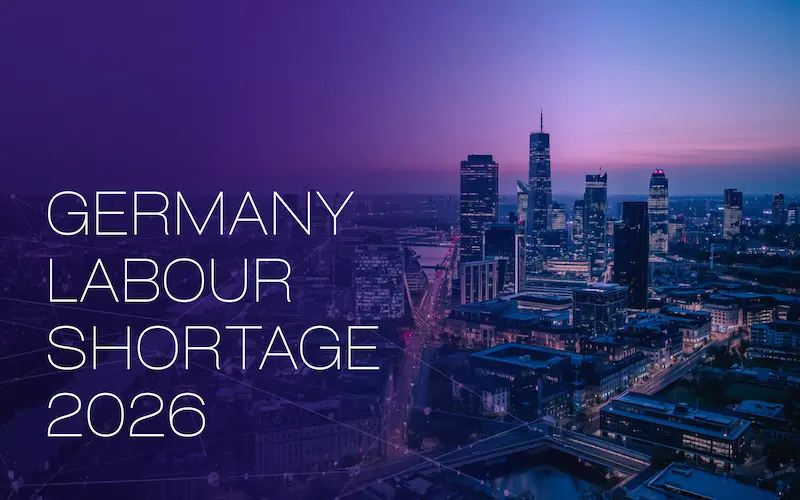
Germany is facing a severe labour shortage in 2026, prompting the government and employers to actively recruit skilled professionals from India. With vacancies rising across critical sectors such as IT, engineering, healthcare, and nursing, the country is rapidly expanding its immigration policies to attract foreign talent.
According to official estimates, Germany needs approximately 288,000 foreign workers every year to sustain its economy and meet labour market demands. This shortage is largely driven by demographic changes, including an ageing population and a shrinking domestic workforce.
As a result, India has emerged as a key partner nation, offering a vast pool of young, skilled professionals ready to contribute to Germany’s economic growth.
Germany’s Workforce Crisis: What’s Causing the Labour Shortage?
Germany’s labour shortage is not a short-term issue but a long-standing structural challenge. Several key factors are contributing to the crisis:
Ageing Population
Germany has one of the oldest populations in Europe. As more workers retire, there are not enough younger individuals to replace them in the workforce.
Low Birth Rate
A declining birth rate over the past decades has reduced the number of working-age individuals entering the labour market.
Rising Demand Across Key Sectors
Industries such as healthcare, engineering, IT, and skilled trades are experiencing significant shortages due to increasing demand and limited local talent.
Emigration and Skill Gaps
In some sectors, skilled workers are either insufficient in number or migrating elsewhere, further widening the gap.
These challenges have forced Germany to look beyond its borders and create more accessible immigration pathways for international workers—particularly from India.
Germany Turns to India: A Strategic Talent Partnership
India has become one of Germany’s most important partners in addressing its workforce shortage. With a large population of educated, English-speaking professionals, India offers a steady supply of talent in high-demand sectors.
German employers are increasingly hiring Indian professionals in:
- Information Technology (IT)
- Engineering and manufacturing
- Healthcare and nursing
- Skilled trades and vocational roles
In addition, Germany is promoting apprenticeship programmes (Ausbildung) to attract young Indian workers, providing them with training and long-term career opportunities.
This collaboration not only supports Germany’s economy but also provides Indian professionals with access to global career prospects.
Major Immigration Reforms for Indian Workers in 2026
To facilitate this influx of skilled talent, Germany has introduced several immigration reforms aimed specifically at Indian nationals.
1. Migration and Mobility Partnership Agreement (2022)
This agreement between India and Germany simplifies visa procedures, enhances mobility, and creates structured pathways for professionals and students.
2. Increase in Skilled Worker Visa Quota
Germany has significantly expanded its annual visa quota for Indian workers:
- Previous quota: 20,000 visas per year
- Updated quota: 90,000 visas per year
This increase reflects Germany’s urgent need for skilled professionals and improves the chances of visa approval for applicants.
3. Focus on Healthcare and Nursing
With an ageing population, Germany is prioritising recruitment in healthcare sectors, especially for nurses and caregivers.
4. Simplified Recognition of Qualifications
Efforts are being made to streamline the recognition of foreign degrees and professional qualifications, making it easier for Indians to enter the workforce.
Salary and Financial Benefits for Indian Professionals
Germany offers competitive salaries and strong financial incentives for foreign workers, particularly those from India.
- Average monthly salary (Indian professionals): €5,393 (approx. ₹5.6 lakh)
- Average monthly salary (German workers): €4,177 (approx. ₹4.3 lakh)
This means Indian workers are earning approximately 29% higher salaries, highlighting their strong demand and skill value in the German market.
In addition to higher pay, professionals benefit from:
- Comprehensive healthcare coverage
- Social security and pension systems
- Paid leave and work-life balance
- Stable employment contracts
Top Reasons Indians Should Work in Germany in 2026
Germany is becoming one of the most attractive destinations for Indian professionals due to several advantages:
High Demand for Skilled Workers
With hundreds of thousands of job vacancies, skilled professionals have better chances of employment.
Simplified Visa Process
Policy reforms and bilateral agreements have made it easier to obtain work visas.
Increased Visa Approval Chances
The expansion of visa quotas significantly improves approval rates.
Apprenticeship and Training Opportunities
Young professionals can enter Germany through vocational programmes, gaining valuable international experience.
Pathway to Permanent Residency
Visa routes such as the EU Blue Card allow professionals to secure long-term residency and eventually citizenship.
Strong Economy and Quality of Life
Germany offers a stable economy, excellent infrastructure, and a high standard of living.
Long-Term Opportunities: Residency and Career Growth
Germany’s immigration system is designed to support long-term settlement. Skilled workers can transition from temporary work visas to permanent residency after a few years.
Key pathways include:
- EU Blue Card: For highly skilled professionals with job offers and salary thresholds
- Permanent Residency: Typically after 4–5 years of continuous employment
- Citizenship: Possible after extended residence and integration
This makes Germany not just a job destination, but a long-term career and life opportunity for Indian professionals.
Challenges to Consider Before Moving
While Germany offers numerous benefits, applicants should also be aware of potential challenges:
- Language barrier: Knowledge of German may be required for certain jobs
- Qualification recognition: Some professions require certification approval
- Cost of relocation: Initial expenses for housing and documentation
- Cultural adaptation: Adjusting to a new work environment and lifestyle
Proper planning and research can help overcome these challenges effectively.
Conclusion
Germany’s labour shortage in 2026 has created unprecedented opportunities for Indian professionals. With expanded visa quotas, higher salaries, and simplified immigration pathways, the country is actively positioning itself as a top destination for global talent.
As demand for skilled workers continues to grow, India’s workforce will play a crucial role in supporting Germany’s economy and addressing its demographic challenges.
For Indian professionals seeking international career growth, financial stability, and long-term residency, Germany presents a compelling opportunity in 2026 and beyond.