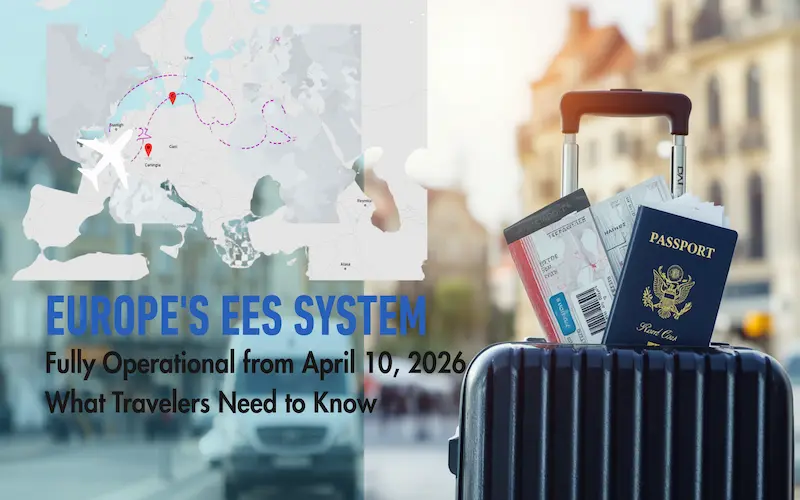
April 10, 2026 marks a major milestone for European border management as the Entry/Exit System (EES) becomes fully operational across all 29 Schengen countries. This long-anticipated digital system replaces traditional passport stamping with biometric data collection and electronic travel records, fundamentally changing how non-European travelers enter and exit the Schengen Area.
What Is the Entry/Exit System (EES)?
The EES is a centralized digital border control system introduced by the European Union to modernize and strengthen external border management. Initially launched on October 12, 2025, the system has now completed its phased rollout.
Instead of manually stamping passports, border authorities now:
- Digitally record every entry and exit
- Track refusals of entry
- Store biometric and travel document data
The system aims to improve border security, reduce identity fraud, and accurately monitor compliance with short-stay rules.
Who Does the EES Apply To?
The EES applies to non-European travelers entering the Schengen Area for short stays (up to 90 days within a 180-day period), including:
- Visa-exempt travelers (e.g., from the US, UK, Canada, Japan)
- Travelers requiring a short-stay Schengen visa
Exemptions:
The system does not apply to:
- EU and Schengen Area citizens
- Long-stay visa holders
- Residence permit holders
- Nationals of Andorra, Monaco, San Marino, and Vatican City
What Data Is Collected Under EES?
At border crossings, the system records:
Personal and Travel Information:
- Full name
- Date and place of birth
- Nationality
- Passport details (number, issuing country, expiry date)
Travel Records:
- Date, time, and location of entry/exit
- Refusal of entry (if applicable)
Biometric Data:
- Facial image
- Fingerprints (for travelers aged 12 and above)
Key Changes for Travelers
1. No More Passport Stamps
Passport stamping is replaced by a digital record, making travel history more accurate and accessible.
2. Longer First Entry Process
On your first trip under EES, expect additional time at border control due to biometric data collection.
3. Faster Future Crossings
Subsequent entries should be quicker, as your data is already stored in the system.
4. Accurate Stay Tracking
The EES automatically calculates time spent in the Schengen Area, helping enforce the 90/180-day rule and reducing errors caused by unreadable or missing stamps.
Data Retention and Privacy
The EES operates under strict EU data protection regulations.
- Data is typically stored for 3 years and 1 day after the last exit
- It may be retained for up to 5 years in cases of overstaying or missing exit records
Travelers have the right to:
- Access their data
- Request corrections
- Request deletion or restriction under certain conditions
EES vs. ETIAS: What’s the Difference?
While EES is now active, the European Travel Information and Authorization System (ETIAS) is not yet in operation.
Key Differences:
- EES: Records entries and exits at the border
- ETIAS: Pre-travel authorization required before departure
ETIAS Launch Timeline:
- Expected in late 2026
- Will apply to visa-exempt travelers
- Requires an online application and a €20 fee
⚠️ Important: No official ETIAS system is live yet. Travelers should avoid fraudulent websites claiming to issue ETIAS approvals.
Early Challenges and Real-World Impact
Although officially launched, some border crossings are still adapting to the system.
Reports indicate:
- Delays at high-traffic points like Dover, Folkestone, and London St. Pancras
- Temporary technical adjustments in certain locations
- Potential longer wait times during initial rollout
Travelers are advised to:
- Arrive early at border checkpoints
- Be prepared for biometric data collection
- Allow extra time during the transition phase
Why the EES Matters
The implementation of EES represents a major shift in EU border policy:
- Enhanced security through biometric verification
- Improved detection of overstays and identity fraud
- Centralized and accurate travel records
For travelers, this means a more digital and structured border experience. For authorities, it provides a powerful tool to monitor and manage external borders more effectively.
Final Thoughts
The full deployment of the Entry/Exit System (EES) signals a new era in European travel. While initial adjustments may cause minor disruptions, the long-term goal is a faster, safer, and more efficient border process.As Europe continues to digitize its border systems, travelers should stay informed and prepared for upcoming changes—especially with ETIAS set to follow later in 2026.
Leave a Reply