Category: newsletter

  • Spain Begins Migrant Regularisation Programme as Nearly 43,000 Apply in First Days

    Spain Begins Migrant Regularisation Programme as Nearly 43,000 Apply in First Days

    Spain has officially launched its large-scale migrant regularisation programme, allowing undocumented immigrants living and working in the country to apply for legal residency status. The initiative, which began accepting applications last week, has already attracted significant interest, with nearly 43,000 migrants registering within the first three days.

    The Spanish government introduced the programme earlier this year and finalised the measure in April. Under the scheme, undocumented migrants can obtain a renewable one-year residence permit if they can prove they have lived in Spain for at least five months and do not have a criminal record. Applications will remain open until the end of June.

    According to official figures, 42,790 online applications were submitted shortly after the process opened. The government estimates that around 500,000 migrants could benefit from the regularisation programme, while Spanish think tank Funcas believes the number may be closer to 840,000.

    To manage the expected influx of applications, more than 370 post offices across Spain have begun assisting applicants. Additional support is also being provided through social security offices and migration centres. Despite concerns over processing capacity, many applicants reported that the system was functioning relatively smoothly, although some cited long waiting times.

    Migrants applying under the programme described the initiative as an important opportunity to secure stability, employment rights, and legal protection. Many applicants expressed hope that regularising their status would allow them to contribute more fully to Spanish society through formal employment and tax contributions.

    Spanish Prime Minister Pedro Sánchez has defended the policy as both a humanitarian and economic necessity. The government argues that migrants already living and working in Spain should be granted legal protections while contributing to the country’s tax and social security systems. Officials also say the measure is essential to address labour shortages caused by Spain’s ageing population and growing economy.

    Spain’s approach stands in sharp contrast to the broader political climate across Europe, where many governments are prioritising stricter border controls, reducing migrant arrivals, and increasing deportations. The Spanish administration, however, maintains that regularisation will strengthen the economy while improving social integration.

    In recent years, Spain’s foreign-born population has expanded significantly, with around 10 million residents born outside the country. Many migrants have arrived from countries such as Colombia, Venezuela, and Morocco, fleeing economic hardship, political instability, or violence. Key industries including agriculture, tourism, hospitality, and services increasingly rely on migrant labour.

    This is not the first time Spain has implemented a migrant amnesty programme. Similar regularisation measures were introduced six times between 1986 and 2005, including under conservative administrations, as part of efforts to address undocumented migration and labour market demands.

  • Europe’s Entry/Exit System (EES) Fully Operational from April 10, 2026: What Travelers Need to Know

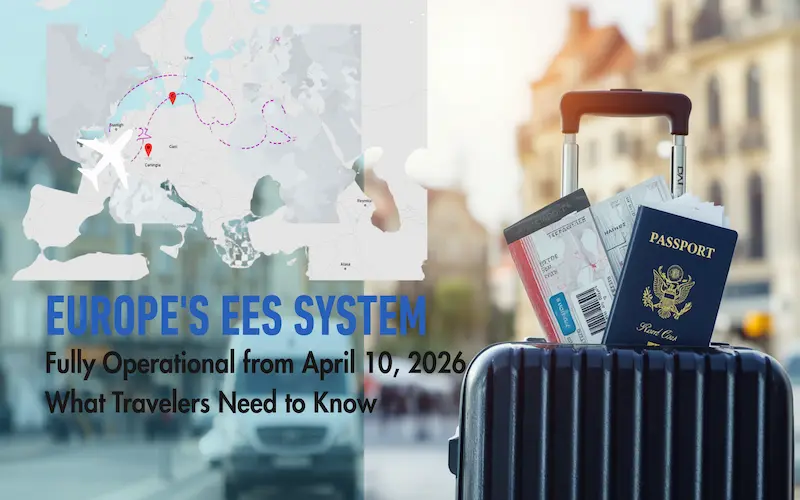
    Europe’s Entry/Exit System (EES) Fully Operational from April 10, 2026: What Travelers Need to Know

    April 10, 2026 marks a major milestone for European border management as the Entry/Exit System (EES) becomes fully operational across all 29 Schengen countries. This long-anticipated digital system replaces traditional passport stamping with biometric data collection and electronic travel records, fundamentally changing how non-European travelers enter and exit the Schengen Area.


    What Is the Entry/Exit System (EES)?

    The EES is a centralized digital border control system introduced by the European Union to modernize and strengthen external border management. Initially launched on October 12, 2025, the system has now completed its phased rollout.

    Instead of manually stamping passports, border authorities now:

    • Digitally record every entry and exit
    • Track refusals of entry
    • Store biometric and travel document data

    The system aims to improve border security, reduce identity fraud, and accurately monitor compliance with short-stay rules.


    Who Does the EES Apply To?

    The EES applies to non-European travelers entering the Schengen Area for short stays (up to 90 days within a 180-day period), including:

    • Visa-exempt travelers (e.g., from the US, UK, Canada, Japan)
    • Travelers requiring a short-stay Schengen visa

    Exemptions:

    The system does not apply to:

    • EU and Schengen Area citizens
    • Long-stay visa holders
    • Residence permit holders
    • Nationals of Andorra, Monaco, San Marino, and Vatican City

    What Data Is Collected Under EES?

    At border crossings, the system records:

    Personal and Travel Information:

    • Full name
    • Date and place of birth
    • Nationality
    • Passport details (number, issuing country, expiry date)

    Travel Records:

    • Date, time, and location of entry/exit
    • Refusal of entry (if applicable)

    Biometric Data:

    • Facial image
    • Fingerprints (for travelers aged 12 and above)

    Key Changes for Travelers

    1. No More Passport Stamps

    Passport stamping is replaced by a digital record, making travel history more accurate and accessible.

    2. Longer First Entry Process

    On your first trip under EES, expect additional time at border control due to biometric data collection.

    3. Faster Future Crossings

    Subsequent entries should be quicker, as your data is already stored in the system.

    4. Accurate Stay Tracking

    The EES automatically calculates time spent in the Schengen Area, helping enforce the 90/180-day rule and reducing errors caused by unreadable or missing stamps.


    Data Retention and Privacy

    The EES operates under strict EU data protection regulations.

    • Data is typically stored for 3 years and 1 day after the last exit
    • It may be retained for up to 5 years in cases of overstaying or missing exit records

    Travelers have the right to:

    • Access their data
    • Request corrections
    • Request deletion or restriction under certain conditions

    EES vs. ETIAS: What’s the Difference?

    While EES is now active, the European Travel Information and Authorization System (ETIAS) is not yet in operation.

    Key Differences:

    • EES: Records entries and exits at the border
    • ETIAS: Pre-travel authorization required before departure

    ETIAS Launch Timeline:

    • Expected in late 2026
    • Will apply to visa-exempt travelers
    • Requires an online application and a €20 fee

    ⚠️ Important: No official ETIAS system is live yet. Travelers should avoid fraudulent websites claiming to issue ETIAS approvals.


    Early Challenges and Real-World Impact

    Although officially launched, some border crossings are still adapting to the system.

    Reports indicate:

    • Delays at high-traffic points like Dover, Folkestone, and London St. Pancras
    • Temporary technical adjustments in certain locations
    • Potential longer wait times during initial rollout

    Travelers are advised to:

    • Arrive early at border checkpoints
    • Be prepared for biometric data collection
    • Allow extra time during the transition phase

    Why the EES Matters

    The implementation of EES represents a major shift in EU border policy:

    • Enhanced security through biometric verification
    • Improved detection of overstays and identity fraud
    • Centralized and accurate travel records

    For travelers, this means a more digital and structured border experience. For authorities, it provides a powerful tool to monitor and manage external borders more effectively.


    Final Thoughts

    The full deployment of the Entry/Exit System (EES) signals a new era in European travel. While initial adjustments may cause minor disruptions, the long-term goal is a faster, safer, and more efficient border process.As Europe continues to digitize its border systems, travelers should stay informed and prepared for upcoming changes—especially with ETIAS set to follow later in 2026.

  • 5-Year Multiple-Entry Schengen Visa for Indians: Cost, Eligibility and How to Apply in 2026

    5-Year Multiple-Entry Schengen Visa for Indians: Cost, Eligibility and How to Apply in 2026

    Europe Opens Doors Wider for Indian Travellers with Long-Term Schengen Visa Option

    Indian travellers planning frequent trips to Europe can now benefit from the 5-year multiple-entry Schengen visa, a long-term travel option that allows seamless movement across the Schengen Area.

    With Europe remaining one of the most popular destinations for tourism, business, and family visits, this visa is designed to simplify travel for individuals with a strong travel history and genuine need for repeated visits.


    What Is a 5-Year Multiple-Entry Schengen Visa?

    The 5-year multiple-entry Schengen visa allows non-EU nationals, including Indians, to:

    • Enter and exit the Schengen Area multiple times
    • Travel across 29 European countries
    • Stay for up to 90 days within any 180-day period 

    This visa is particularly useful for frequent travellers, business professionals, and individuals visiting family in Europe.


    Who Is Eligible for a 5-Year Schengen Visa?

    The long-term visa is not automatically granted to all applicants. Instead, it is issued based on travel history and credibility.

    Key Eligibility Criteria:

    • Applicants must have previously obtained and lawfully used Schengen visas
    • A strong travel history with multiple entries into the Schengen Area
    • Proof of frequent travel needs (business, family, or tourism)
    • Valid passport with sufficient validity

    Under updated EU rules, Indian nationals who have successfully used shorter-term visas may gradually qualify for longer visas, eventually leading to a 5-year validity visa.


    Cost of 5-Year Multiple-Entry Schengen Visa

    One of the biggest advantages is that the cost remains the same as a standard short-term visa.

    Visa Fees (2026):

    • Adults: €90 (approx. ₹8,500–₹9,500) 
    • Children (6–12 years): €40–€45 
    • Children under 6: Free

    Additional Costs:

    • Visa service charges (VFS/BLS): ₹1,500–₹2,500
    • Travel insurance: ₹800–₹2,500
    • Documentation and processing costs

    👉 Total estimated cost: ₹12,000–₹18,000 per applicant 

    Despite the long validity, the fee remains the same, making it a cost-effective option for frequent travellers.


    How to Apply for a 5-Year Schengen Visa

    The application process is similar to a regular Schengen visa:

    Step 1: Choose the Right Embassy

    Apply through the country where you will spend the most time.

    Step 2: Fill Out the Visa Application Form

    Provide accurate personal, travel, and financial details.

    Step 3: Prepare Required Documents

    • Valid passport
    • Travel itinerary
    • Proof of accommodation
    • Travel insurance
    • Financial proof
    • Previous visa history

    Step 4: Book Appointment

    Schedule an appointment at a visa centre such as VFS Global.

    Step 5: Attend Biometrics and Interview

    Submit fingerprints and attend an interview if required.

    Step 6: Wait for Processing

    • Processing time: 15–30 days (may vary by country)

    Important Rules to Keep in Mind

    • Maximum stay: 90 days in any 180-day period
    • Visa does not allow employment in Europe
    • Overstaying may lead to penalties or future visa rejection
    • Final decision is at the embassy’s discretion

    Even if you apply for a 5-year visa, you may be granted a shorter validity depending on your profile.


    Why This Visa Is Popular in 2026

    The 5-year multiple-entry Schengen visa is gaining popularity due to:

    • Increasing travel demand from India
    • Growing business and tourism ties with Europe
    • Simplified EU visa rules for frequent travellers
    • Cost efficiency compared to repeated short-term visa applications

    For professionals and regular travellers, this visa offers convenience, flexibility, and long-term planning benefits.


    Tips to Increase Approval Chances

    To improve your chances of getting a long-term visa:

    • Maintain a strong travel history
    • Apply through the same embassy consistently
    • Provide a detailed cover letter explaining travel purpose
    • Show stable financial and employment background

    Applicants with a clean visa record and genuine travel needs are more likely to receive long-term visas.


    Conclusion

    The introduction of the 5-year multiple-entry Schengen visa for Indians represents a major step toward easier travel to Europe. With the same cost as a standard visa but significantly longer validity, it offers a practical solution for frequent travellers.

    However, approval depends on your travel history, documentation, and overall profile. Proper planning and preparation are key to securing this long-term visa.

  • Portugal Work-Seeking Visa 2026: New Rules, Residency Changes and What It Means for Foreign Workers

    Portugal Work-Seeking Visa 2026: New Rules, Residency Changes and What It Means for Foreign Workers

    Portugal Introduces New Skilled Work-Seeking Visa Amid Stricter Immigration Policies

    Portugal has introduced major changes to its immigration system in 2026, including a new skilled work-seeking visa and updated residency rules, marking a significant shift in how the country manages foreign workers and migration.

    The reforms aim to attract qualified professionals while tightening regulations around family reunification, illegal stays, and residency pathways. These changes reflect Portugal’s broader strategy to balance economic growth with controlled migration policies.


    What Is Portugal’s New Work-Seeking Visa?

    Portugal’s new visa replaces the earlier general job-seeker visa with a more targeted, skill-based system.

    Under the updated framework:

    • Only qualified and skilled professionals will be eligible
    • The visa is designed to meet labour market demands
    • It prioritises candidates with education, technical expertise, or work experience

    This shift highlights Portugal’s move toward a skill-driven immigration model, similar to systems used in countries like Germany and the Netherlands.


    End of Post-Arrival Residency Pathway

    One of the most significant changes is the removal of the post-arrival residency option.

    Previously, foreign nationals could:

    • Enter Portugal on a temporary basis
    • Find employment
    • Later apply for residency

    Now, applicants must:

    • Secure the appropriate visa before entering Portugal
    • Follow formal immigration procedures from their home country

    This change aims to create a more structured and controlled migration system.


    Stricter Family Reunification Rules

    Portugal has also introduced tighter rules for family reunification, making it more challenging for migrants to bring their family members.

    Key changes include:

    • Longer waiting periods before sponsoring family
    • Stricter eligibility criteria for dependents
    • Increased documentation requirements

    These measures are intended to regulate migration flows and ensure better integration of foreign workers.


    Tougher Penalties for Illegal Stay

    The new immigration framework introduces stronger enforcement measures against illegal stays.

    Authorities are implementing:

    • Harsher penalties for visa overstays
    • Increased monitoring of immigration status
    • Stricter compliance requirements

    These steps are designed to improve immigration control and system credibility.


    Focus on Attracting Skilled Talent

    Despite stricter rules, Portugal continues to position itself as a destination for global talent.

    The new visa system aims to attract professionals in sectors such as:

    • Information Technology (IT)
    • Healthcare and medical services
    • Engineering and technical fields
    • Tourism and hospitality

    Portugal’s growing economy and demand for skilled workers make it an attractive option for international professionals.


    Impact on Indian and Global Job Seekers

    The updated visa rules are expected to significantly impact applicants from countries like India.

    Opportunities:

    • Easier access for skilled professionals
    • Better alignment with job market demand
    • Potential pathway to long-term residency

    Challenges:

    • Higher eligibility requirements
    • Limited options for unskilled workers
    • Stricter immigration procedures

    Applicants are now required to prepare qualifications, financial proof, and documentation in advance before applying.


    Possible Changes to Citizenship Rules

    Portugal is also considering further changes to its citizenship laws, which may impact long-term residents.

    Recent policy discussions suggest:

    • Longer residency periods before citizenship eligibility
    • Stricter integration requirements

    These potential changes indicate a broader shift toward controlled and merit-based migration policies.


    Portugal’s Changing Immigration Strategy

    Portugal’s new visa and residency reforms reflect a broader European trend of:

    • Attracting highly skilled talent
    • Reducing irregular migration
    • Strengthening immigration control systems

    The country is moving from a flexible immigration approach to a more structured and selective system.


    What Applicants Should Do in 2026

    If you are planning to move to Portugal, experts recommend:

    • Applying for the correct visa before travel
    • Preparing all required documents in advance
    • Ensuring your qualifications meet skill requirements
    • Planning family reunification carefully

    Early preparation is now essential due to stricter rules and reduced flexibility.


    Conclusion

    Portugal’s new work-seeking visa and immigration reforms mark a major transformation in 2026. While the country remains open to global talent, it is now prioritising skilled professionals and structured migration pathways.

    For job seekers, this means better opportunities—but also higher requirements and stricter compliance. Understanding these changes is crucial for anyone planning to work or settle in Portugal in the coming years.

  • EU Unveils First-Ever Visa Strategy 2026: Easier Travel, Stronger Borders and Global Talent Push

    EU Unveils First-Ever Visa Strategy 2026: Easier Travel, Stronger Borders and Global Talent Push

    European Union Introduces New Visa Strategy to Boost Travel and Attract Skilled Workers

    The European Commission has officially launched its first-ever EU Visa Strategy in 2026, marking a major shift in how the region manages travel, migration, and global talent attraction. The new framework is designed to simplify visa procedures, strengthen border security, and position Europe as a leading destination for skilled professionals, students, and investors.

    This landmark policy aims to modernize the EU’s visa system while addressing global competition for talent and evolving geopolitical challenges.


    Why the EU Introduced a New Visa Strategy

    The introduction of a unified visa strategy reflects the European Union’s need to adapt to changing global dynamics. With increasing labour shortages and competition from countries like the United States, Canada, and Australia, the EU is focusing on making its visa system more efficient and attractive.

    The strategy is built around three main goals:

    • Enhancing border security and migration control
    • Simplifying travel for tourists and business visitors
    • Attracting global talent to support economic growth

    Officials have emphasized that visa policy is no longer just about entry control—it is now a strategic tool for economic development and international competitiveness.


    Key Features of the EU Visa Strategy 2026

    1. Faster and Digital Visa Processes

    One of the core pillars of the strategy is digitalisation of visa systems. The EU plans to introduce:

    • Fully digital visa applications
    • Faster processing timelines
    • Integration with advanced border systems

    This move is expected to reduce administrative delays and improve the overall travel experience.


    2. Easier Travel for Tourists and Business Visitors

    The strategy aims to make travel to Europe more accessible by:

    • Simplifying visa procedures
    • Offering smoother entry for frequent travellers
    • Improving consistency across member states

    This is expected to boost tourism and business mobility within the EU.


    3. Attracting Skilled Workers and Global Talent

    A major focus of the new policy is to attract highly skilled professionals from outside the EU, including:

    • Researchers and scientists
    • Students and academics
    • Entrepreneurs and innovators
    • Technology and engineering professionals

    The EU plans to introduce targeted measures to make it easier for these groups to enter and work in Europe.


    4. Longer and Multi-Entry Visas for Trusted Travellers

    Frequent and low-risk travellers may benefit from:

    • Longer validity visas
    • Multiple-entry permits
    • Reduced documentation requirements

    This approach aims to support business travellers and professionals who regularly travel to the EU.


    5. Stronger Security and Border Control

    While easing travel, the EU is also strengthening its security framework by:

    • Enhancing screening systems
    • Improving data-sharing between member states
    • Introducing stricter monitoring of visa-free travel

    The strategy ensures that increased mobility does not compromise security.


    New Focus on Global Talent and Economic Growth

    The EU’s visa reforms highlight a clear shift toward talent-driven migration policies. With many European countries facing workforce shortages, attracting skilled professionals has become a priority.

    The strategy includes recommendations to:

    • Simplify visa rules for skilled workers
    • Support international students transitioning to employment
    • Encourage innovation and entrepreneurship

    This aligns visa policy with the EU’s broader economic goals of growth, competitiveness, and innovation.


    Impact on Travellers, Students and Professionals

    The new EU visa strategy is expected to bring several benefits:

    For Travellers

    • Faster visa approvals
    • Easier application processes
    • Improved travel experience across Schengen countries

    For Students and Professionals

    • Better access to education and job opportunities
    • Simplified migration pathways
    • Increased chances of long-term residency

    For Businesses

    • Easier hiring of international talent
    • Reduced administrative burden
    • Improved global mobility for employees

    Digital Tools and Future Changes (ETIAS and Beyond)

    The strategy is closely linked to the rollout of digital border systems such as:

    • ETIAS (European Travel Information and Authorisation System)
    • Advanced biometric and data-sharing technologies

    These systems will allow pre-screening of travellers and improve border management efficiency.


    What This Means for the Future of EU Travel

    The EU’s first visa strategy represents a major transformation in how Europe manages mobility. By combining security, digital innovation, and talent attraction, the policy sets a long-term direction for travel and migration.

    Experts believe this move will:

    • Strengthen Europe’s position in the global talent market
    • Improve economic growth across member states
    • Create a more efficient and transparent visa system

    Conclusion

    The launch of the EU Visa Strategy 2026 marks a significant milestone in European migration policy. By simplifying travel, enhancing security, and actively attracting global talent, the European Union is positioning itself as a more competitive and accessible destination.

    As implementation progresses over the coming years, travellers, students, and professionals can expect a more streamlined and digitally advanced visa experience across Europe.

  • European Job Days 2026: 15 Years of Connecting Talent with Jobs Across Europe

    European Job Days 2026: 15 Years of Connecting Talent with Jobs Across Europe

    EURES Celebrates 15 Years of European Job Days with New Recruitment Campaign

    The European Job Days (EJDs), a flagship initiative by the EURES network, marks 15 years of connecting jobseekers and employers across Europe in 2026. Since its launch in 2011, the platform has transformed the way recruitment works across borders, making it easier for individuals to find jobs and for companies to access skilled talent.

    To celebrate this milestone, EURES has launched the “Join the European Job Days” campaign, running until December 2026. The campaign aims to raise awareness about the platform’s benefits and encourage more jobseekers and employers to take advantage of its services.


    What Are European Job Days (EJDs)?

    European Job Days are pan-European recruitment events and an online platform designed to connect talent with employment opportunities across EU countries.

    Operated by the EURES network and supported by the European Labour Authority (ELA) and the European Commission, EJDs combine:

    • Digital recruitment tools
    • Cross-border job matching
    • Expert career guidance

    In an era marked by labour shortages and evolving job markets, EJDs provide a reliable and efficient solution for both employers and jobseekers.


    Key Achievements: 15 Years of Impact

    Over the past decade and a half, European Job Days have delivered impressive results:

    • 400,000+ jobseekers participated
    • 364 recruitment events organised
    • 14,000 employers engaged
    • 32 European countries involved
    • 25,000 job vacancies posted
    • 250,000 job applications submitted

    The platform spans multiple industries, including:

    • Information Technology (IT)
    • Healthcare and nursing
    • Tourism and hospitality
    • Construction and engineering
    • Renewable energy and more

    These numbers highlight EJDs as one of Europe’s most effective tools for cross-border employment and talent mobility.


    For Jobseekers: Your Gateway to Working in Europe

    European Job Days offer jobseekers a unique opportunity to explore career prospects across Europe from a single platform.

    Whether you aspire to work in Berlin’s tech industry, Copenhagen’s green energy sector, or Madrid’s tourism market, EJDs provide direct access to employers actively hiring international talent.

    Key Benefits for Jobseekers:

    • Free and secure platform
    • Access to thousands of verified job vacancies
    • Ability to attend recruitment events online
    • Opportunity to interview with employers remotely
    • Guidance through video tutorials and career advisors

    Users can register, apply for jobs, schedule interviews, and communicate with recruiters—all from the comfort of their home.

    This makes EJDs an ideal solution for professionals looking to work abroad in Europe without complex relocation barriers.


    For Employers: Access to a Diverse European Talent Pool

    European Job Days also provide significant advantages for employers struggling to fill roles in competitive sectors.

    Companies can:

    • Post job vacancies for free
    • Access a large database of qualified candidates
    • Connect with jobseekers willing to relocate internationally
    • Conduct interviews and recruitment online

    In industries facing critical skill shortages, EJDs enable businesses to tap into a wider talent pool beyond national borders.

    The platform also promotes fair and transparent hiring practices, ensuring that candidates are matched not only based on skills but also cultural and organisational fit.

    From seasonal roles to senior-level positions, EJDs help employers find the right talent efficiently.


    A Trusted Platform Backed by European Institutions

    European Job Days are powered by the EURES network, with support from the European Labour Authority and the European Commission. This ensures:

    • High levels of trust and credibility
    • Verified job listings
    • Compliance with EU labour standards
    • Secure and transparent recruitment processes

    As Cosmin Boiangiu, Executive Director of the European Labour Authority, stated:

    “For 15 years, European Job Days have transformed lives by connecting jobseekers with employers across Europe. It is online trans-European recruitment made easy and fair.”


    Why European Job Days Matter in 2026

    With Europe facing growing labour shortages and increasing demand for skilled workers, platforms like EJDs are more relevant than ever.

    They help:

    • Bridge skill gaps across countries
    • Promote labour mobility within Europe
    • Support economic growth and workforce development
    • Provide equal access to job opportunities

    As the European job market continues to evolve, EJDs remain a key tool in ensuring efficient and inclusive recruitment.


    How to Join European Job Days

    Jobseekers and employers can easily participate by:

    1. Registering on the European Job Days platform
    2. Browsing upcoming recruitment events
    3. Applying for jobs or posting vacancies
    4. Attending online interviews and networking sessions

    The ongoing “Join the European Job Days” campaign also encourages users to stay updated through social media using the hashtag #EuropeanJobDays.


    Conclusion

    After 15 years of success, European Job Days continue to play a vital role in connecting talent with opportunity across Europe. By combining digital innovation with expert support, the platform offers a seamless and effective recruitment experience for both jobseekers and employers.

    As Europe moves toward a more integrated and competitive labour market, EJDs stand out as a powerful solution for cross-border employment, skills matching, and career growth.

  • Belarus Extends Visa-Free Entry for 38 European Countries Until End of 2026

    Belarus Extends Visa-Free Entry for 38 European Countries Until End of 2026

    Belarus Continues Visa-Free Travel Policy to Boost Tourism and Cross-Border Mobility

    Belarus has officially extended its visa-free entry programme for citizens of 38 European countries through December 31, 2026, reinforcing its commitment to facilitating travel and strengthening regional mobility.

    Originally introduced in July 2024, the visa-free regime was first extended through 2025 and has now been prolonged again under a new presidential decree, reflecting the programme’s growing success and impact on tourism and cross-border movement.


    Visa-Free Entry Rules: Duration, Eligibility and Conditions

    Under the extended policy, eligible travellers from 38 European countries can enter Belarus without a visa through:

    • International road checkpoints
    • Rail border crossings
    • Belarusian airports

    Visitors must carry a valid travel document and comply with the following conditions:

    • Maximum stay: 30 days per entry
    • Multiple entries allowed: Yes
    • Annual limit: Total stay cannot exceed 90 days per calendar year

    Special Stay Provisions

    Citizens of Poland, Lithuania, and Latvia, as well as individuals with Latvia’s non-citizen status, are granted extended stays of up to 90 days per entry.

    Travellers are also permitted to transit through Belarus to third countries, with the exception of the Russian Federation.


    Who Is Not Eligible?

    The visa-free regime does not apply to holders of:

    • Diplomatic passports
    • Service or official passports

    However, biometric diplomatic passport holders from EU countries remain eligible under the existing EU–Belarus visa facilitation agreement.


    Over 1.2 Million European Visitors Since Launch

    The visa-free policy has significantly boosted tourism and regional travel. According to Belarus’s State Border Committee:

    • Total visitors since 2024: Over 1.24 million European travellers

    Top Visiting Countries

    • Latvia: 399,842 visitors
    • Lithuania: 658,575 visitors
    • Poland: 130,089 visitors

    Additionally, more than 54,000 travellers from 35 other European countries have visited Belarus, including over 22,000 German nationals.

    In 2026 alone, more than 210,000 foreign visitors from eligible countries have already entered Belarus under the visa-free scheme.


    Belarus Expands E-Visa Programme for Global Travellers

    Alongside the visa-free initiative, Belarus has been strengthening its digital visa system. Since March 2025, the country has introduced an electronic visa (e-Visa) programme available to travellers from 67 countries.

    According to the National Center for Electronic Services (NCES):

    • Around 1,500 e-visas have been issued since launch
    • Applicants include travellers from the United States, Germany, Japan, Canada, UK, France, Italy, Spain, and Australia

    Officials report steady growth in applications, highlighting the programme’s expanding global reach.


    Belarus Aims to Strengthen Tourism and International Connectivity

    Belarusian authorities have emphasised their commitment to maintaining a welcoming environment for international visitors and economic partners.

    The government aims to:

    • Enhance tourism and cross-border travel
    • Strengthen economic cooperation
    • Promote Belarus as a safe and accessible destination

    Officials state they are creating “comfortable and secure conditions” for travellers, while showcasing the country’s hospitality and openness.


    Conclusion

    The extension of Belarus’s visa-free regime until the end of 2026 highlights the country’s strategic focus on increasing tourism and facilitating international mobility.

    Combined with its expanding e-visa programme, Belarus is positioning itself as a more accessible destination for European and global travellers, offering simplified entry procedures and flexible travel options.

  • EU Migration and Visa Strategy 2026: European Commission Unveils 5-Year Plan to Control Borders and Attract Talent

    EU Migration and Visa Strategy 2026: European Commission Unveils 5-Year Plan to Control Borders and Attract Talent

    European Commission Launches First-Ever Migration and Visa Strategy for the Next Five Years

    The European Commission has unveiled a landmark dual initiative aimed at reshaping migration and mobility across the European Union. For the first time, the EU has introduced a comprehensive Asylum and Migration Management Strategy alongside its first-ever Visa Strategy, setting a unified direction for the next five years.

    These two interconnected frameworks are designed to strengthen border security, reduce irregular migration, attract global talent, and modernise visa systems in response to evolving geopolitical and economic challenges.


    A Long-Term Vision for EU Migration Policy

    The new strategy marks a significant shift toward a long-term, structured approach to migration management within the EU. It builds on recent progress, including:

    • Strengthening of external borders
    • Enhanced cooperation with third countries
    • Implementation of the Pact on Migration and Asylum

    According to Henna Virkkunen, Executive Vice-President for Tech Sovereignty, Security and Democracy, the plan provides a “clear five-year political blueprint” built on existing foundations, with full implementation of migration reforms expected to accelerate from 2026.

    The European Commission emphasises a balanced migration approach, combining strict border control with the protection of fundamental rights and humanitarian obligations.


    EU’s Three Core Migration Objectives

    At the heart of the new strategy are three key priorities:

    1. Preventing Irregular Migration

    The EU aims to significantly reduce illegal migration flows through stricter border enforcement and improved monitoring systems.

    2. Protecting Those in Need

    The strategy ensures continued support for individuals requiring international protection, maintaining the EU’s humanitarian commitments.

    3. Attracting Global Talent

    Recognising labour shortages across Europe, the EU is focusing on attracting skilled workers, students, researchers, and entrepreneurs.

    This approach reflects what officials describe as a “paradigm shift”, aligning migration policy with economic growth and workforce demands.


    Stronger Borders and Migration Partnerships

    A key pillar of the strategy is reinforcing the EU’s external borders while expanding partnerships with countries along migration routes.

    The Commission plans to:

    • Strengthen migration diplomacy and cooperation with partner nations
    • Address migration challenges before they reach EU borders
    • Improve operational support and coordination across member states

    Magnus Brunner, EU Commissioner for Internal Affairs and Migration, highlighted that this is the first comprehensive strategy prioritising the reduction of illegal migration, aiming to bring irregular arrivals to minimal levels.

    Recent data shows a 55% decline in irregular border crossings over the past two years, reflecting the impact of strengthened border controls.


    Improving Return Policies and System Credibility

    The strategy also focuses on improving the enforcement of return decisions. Currently, only about 25% of return orders are implemented, raising concerns about system effectiveness.

    EU officials stress that strengthening return mechanisms is essential to:

    • Maintain public trust
    • Ensure rule enforcement
    • Enhance overall migration system credibility

    Europe’s Push to Attract Skilled Workers

    Amid growing labour shortages, the EU is placing strong emphasis on legal migration pathways to attract international talent.

    Europe aims to position itself as a top global destination for skilled professionals, addressing workforce gaps in sectors such as:

    • Technology and engineering
    • Healthcare and nursing
    • Research and innovation
    • Education and entrepreneurship

    This strategy links migration policy with economic development, ensuring that mobility contributes to long-term growth and competitiveness.


    EU Introduces Its First-Ever Visa Strategy

    Alongside migration reforms, the European Commission has launched the EU’s first unified Visa Strategy, aimed at modernising and strengthening visa policies across member states.

    The strategy focuses on:

    • Enhancing security and monitoring systems
    • Strengthening the visa-free travel framework
    • Aligning visa policies with diplomatic and economic goals

    Officials emphasise that visa policy is now a critical tool at the intersection of security, diplomacy, and global competitiveness.

    Magnus Brunner described visa-free travel as a “privilege, not a right,” highlighting stricter compliance requirements for countries benefiting from visa exemptions.


    Digital Transformation of EU Visa Systems

    A major highlight of the new strategy is the digitalisation of visa and border management systems.

    Key Developments Include:

    • ETIAS (European Travel Information and Authorisation System):
      Expected to be fully operational by the end of 2026, enabling pre-travel screening for visa-exempt travellers
    • Entry/Exit System (EES):
      A digital system to track border crossings in the Schengen Area
    • Full Visa Digitalisation by 2028:
      Streamlining application processes and improving efficiency

    According to EU officials, digitalisation will significantly enhance the traveller experience while strengthening security and data management.


    Balancing Security, Mobility and Economic Growth

    The dual strategy highlights the EU’s commitment to balancing multiple priorities:

    • Security: Stronger border controls and migration management
    • Mobility: Easier and more efficient travel processes
    • Economic Growth: Attracting global talent to fill labour shortages

    The framework will be supported by funding under the 2028–2034 EU budget, ensuring long-term implementation across member states.


    Conclusion

    The European Commission’s new migration and visa strategy represents a major in how the EU manages mobility, security, and talent attraction.

    By combining stricter controls with modernised systems and expanded legal pathways, the EU aims to create a more efficient, secure, and competitive migration framework over the next five years.

    As global migration patterns continue to evolve, this strategy positions Europe to better manage challenges while remaining an attractive destination for international talent.

  • Germany Labour Shortage 2026: Massive Demand for Indian Professionals as Visa Rules Ease

    Germany Labour Shortage 2026: Massive Demand for Indian Professionals as Visa Rules Ease

    Germany Expands Recruitment of Indian Talent to Tackle Growing Skill Crisis

    Germany is facing a severe labour shortage in 2026, prompting the government and employers to actively recruit skilled professionals from India. With vacancies rising across critical sectors such as IT, engineering, healthcare, and nursing, the country is rapidly expanding its immigration policies to attract foreign talent.

    According to official estimates, Germany needs approximately 288,000 foreign workers every year to sustain its economy and meet labour market demands. This shortage is largely driven by demographic changes, including an ageing population and a shrinking domestic workforce.

    As a result, India has emerged as a key partner nation, offering a vast pool of young, skilled professionals ready to contribute to Germany’s economic growth.


    Germany’s Workforce Crisis: What’s Causing the Labour Shortage?

    Germany’s labour shortage is not a short-term issue but a long-standing structural challenge. Several key factors are contributing to the crisis:

    Ageing Population

    Germany has one of the oldest populations in Europe. As more workers retire, there are not enough younger individuals to replace them in the workforce.

    Low Birth Rate

    A declining birth rate over the past decades has reduced the number of working-age individuals entering the labour market.

    Rising Demand Across Key Sectors

    Industries such as healthcare, engineering, IT, and skilled trades are experiencing significant shortages due to increasing demand and limited local talent.

    Emigration and Skill Gaps

    In some sectors, skilled workers are either insufficient in number or migrating elsewhere, further widening the gap.

    These challenges have forced Germany to look beyond its borders and create more accessible immigration pathways for international workers—particularly from India.


    Germany Turns to India: A Strategic Talent Partnership

    India has become one of Germany’s most important partners in addressing its workforce shortage. With a large population of educated, English-speaking professionals, India offers a steady supply of talent in high-demand sectors.

    German employers are increasingly hiring Indian professionals in:

    • Information Technology (IT)
    • Engineering and manufacturing
    • Healthcare and nursing
    • Skilled trades and vocational roles

    In addition, Germany is promoting apprenticeship programmes (Ausbildung) to attract young Indian workers, providing them with training and long-term career opportunities.

    This collaboration not only supports Germany’s economy but also provides Indian professionals with access to global career prospects.


    Major Immigration Reforms for Indian Workers in 2026

    To facilitate this influx of skilled talent, Germany has introduced several immigration reforms aimed specifically at Indian nationals.

    1. Migration and Mobility Partnership Agreement (2022)

    This agreement between India and Germany simplifies visa procedures, enhances mobility, and creates structured pathways for professionals and students.

    2. Increase in Skilled Worker Visa Quota

    Germany has significantly expanded its annual visa quota for Indian workers:

    • Previous quota: 20,000 visas per year
    • Updated quota: 90,000 visas per year

    This increase reflects Germany’s urgent need for skilled professionals and improves the chances of visa approval for applicants.

    3. Focus on Healthcare and Nursing

    With an ageing population, Germany is prioritising recruitment in healthcare sectors, especially for nurses and caregivers.

    4. Simplified Recognition of Qualifications

    Efforts are being made to streamline the recognition of foreign degrees and professional qualifications, making it easier for Indians to enter the workforce.


    Salary and Financial Benefits for Indian Professionals

    Germany offers competitive salaries and strong financial incentives for foreign workers, particularly those from India.

    • Average monthly salary (Indian professionals): €5,393 (approx. ₹5.6 lakh)
    • Average monthly salary (German workers): €4,177 (approx. ₹4.3 lakh)

    This means Indian workers are earning approximately 29% higher salaries, highlighting their strong demand and skill value in the German market.

    In addition to higher pay, professionals benefit from:

    • Comprehensive healthcare coverage
    • Social security and pension systems
    • Paid leave and work-life balance
    • Stable employment contracts

    Top Reasons Indians Should Work in Germany in 2026

    Germany is becoming one of the most attractive destinations for Indian professionals due to several advantages:

    High Demand for Skilled Workers

    With hundreds of thousands of job vacancies, skilled professionals have better chances of employment.

    Simplified Visa Process

    Policy reforms and bilateral agreements have made it easier to obtain work visas.

    Increased Visa Approval Chances

    The expansion of visa quotas significantly improves approval rates.

    Apprenticeship and Training Opportunities

    Young professionals can enter Germany through vocational programmes, gaining valuable international experience.

    Pathway to Permanent Residency

    Visa routes such as the EU Blue Card allow professionals to secure long-term residency and eventually citizenship.

    Strong Economy and Quality of Life

    Germany offers a stable economy, excellent infrastructure, and a high standard of living.


    Long-Term Opportunities: Residency and Career Growth

    Germany’s immigration system is designed to support long-term settlement. Skilled workers can transition from temporary work visas to permanent residency after a few years.

    Key pathways include:

    • EU Blue Card: For highly skilled professionals with job offers and salary thresholds
    • Permanent Residency: Typically after 4–5 years of continuous employment
    • Citizenship: Possible after extended residence and integration

    This makes Germany not just a job destination, but a long-term career and life opportunity for Indian professionals.


    Challenges to Consider Before Moving

    While Germany offers numerous benefits, applicants should also be aware of potential challenges:

    • Language barrier: Knowledge of German may be required for certain jobs
    • Qualification recognition: Some professions require certification approval
    • Cost of relocation: Initial expenses for housing and documentation
    • Cultural adaptation: Adjusting to a new work environment and lifestyle

    Proper planning and research can help overcome these challenges effectively.


    Conclusion

    Germany’s labour shortage in 2026 has created unprecedented opportunities for Indian professionals. With expanded visa quotas, higher salaries, and simplified immigration pathways, the country is actively positioning itself as a top destination for global talent.

    As demand for skilled workers continues to grow, India’s workforce will play a crucial role in supporting Germany’s economy and addressing its demographic challenges.

    For Indian professionals seeking international career growth, financial stability, and long-term residency, Germany presents a compelling opportunity in 2026 and beyond.
  • Bulgaria Digital Nomad Visa 2026: Eligibility, Requirements and How to Apply

    Bulgaria Digital Nomad Visa 2026: Eligibility, Requirements and How to Apply

    Bulgaria Launches Digital Nomad Visa as It Joins Schengen and Adopts Euro

    Bulgaria has officially introduced its digital nomad visa in 2026, opening new opportunities for remote workers seeking to live and work in Europe. The move comes shortly after the country adopted the euro and joined the Schengen Zone in 2025, significantly enhancing its appeal as a base for international professionals.

    With a lower cost of living compared to many European countries, growing coworking infrastructure, and diverse landscapes ranging from mountains to coastal resorts, Bulgaria is positioning itself as a competitive destination for digital nomads.


    Who Is Eligible for Bulgaria’s Digital Nomad Visa?

    The Bulgaria digital nomad visa is available to non-EU and non-EEA citizens who work remotely and earn income from outside the country.

    Applicants must meet one of the following criteria:

    • Remote employees working for companies registered outside the EU, EEA, or Switzerland
    • Business owners or shareholders holding more than 25% in a foreign company
    • Freelancers or independent professionals serving non-Bulgarian clients for at least one year

    In addition, applicants must meet a minimum income requirement. Currently, this is set at €31,000 per year, based on 50 times Bulgaria’s monthly minimum wage of €620.


    How to Apply for the Bulgaria Digital Nomad Visa

    The application process for Bulgaria’s digital nomad visa involves two main steps:

    Step 1: Apply for a Type D Visa

    Applicants must first obtain a Type D long-stay visa from a Bulgarian embassy or consulate in their home country.

    • Processing time: 4 to 8 weeks
    • Purpose: Allows entry into Bulgaria to apply for residency

    Step 2: Apply for a Residence Permit

    After arriving in Bulgaria, applicants must apply for a residence permit under the Digital Nomad Visa programme within 14 days.


    Required Documents

    To successfully apply, candidates must provide:

    • Proof of accommodation (rental agreement, hotel booking, or property ownership)
    • Valid passport and visa documentation
    • Clean criminal record certificate
    • Proof of income meeting the minimum threshold
    • Health insurance valid in Bulgaria and across the Schengen Area
    • Official translations and apostilled documents where required

    Applicants must also apply for a Bulgarian identification card as part of the final stage.


    Processing Time and Visa Validity

    The full process—from visa application to residence approval—can take over three months.

    • Initial residence permit: 1 year
    • Renewal: Additional 1 year, subject to eligibility

    Why Bulgaria Is Attractive for Digital Nomads

    Bulgaria is emerging as a strong contender in the digital nomad visa space due to several advantages:

    • Lower cost of living compared to Western Europe
    • Access to Schengen Zone travel
    • Use of the euro currency
    • Expanding coworking and remote work infrastructure
    • Diverse lifestyle options, including cities, mountains, and beaches

    These factors make Bulgaria an appealing destination for remote workers looking for affordability without compromising access to Europe.


    Conclusion

    The launch of Bulgaria’s digital nomad visa marks another step in Europe’s growing competition to attract global remote talent. With relatively accessible income requirements and a strategic location within the Schengen Area, Bulgaria offers a compelling option for professionals planning to relocate in 2026.