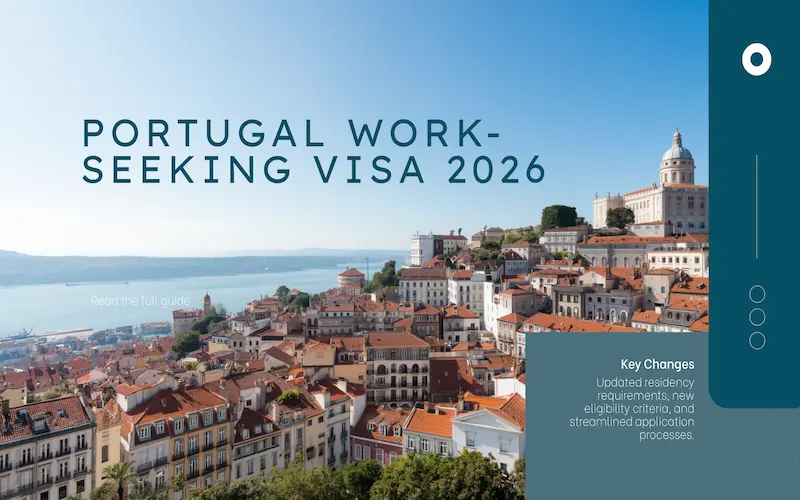
Portugal Introduces New Skilled Work-Seeking Visa Amid Stricter Immigration Policies
Portugal has introduced major changes to its immigration system in 2026, including a new skilled work-seeking visa and updated residency rules, marking a significant shift in how the country manages foreign workers and migration.
The reforms aim to attract qualified professionals while tightening regulations around family reunification, illegal stays, and residency pathways. These changes reflect Portugal’s broader strategy to balance economic growth with controlled migration policies.
What Is Portugal’s New Work-Seeking Visa?
Portugal’s new visa replaces the earlier general job-seeker visa with a more targeted, skill-based system.
Under the updated framework:
- Only qualified and skilled professionals will be eligible
- The visa is designed to meet labour market demands
- It prioritises candidates with education, technical expertise, or work experience
This shift highlights Portugal’s move toward a skill-driven immigration model, similar to systems used in countries like Germany and the Netherlands.
End of Post-Arrival Residency Pathway
One of the most significant changes is the removal of the post-arrival residency option.
Previously, foreign nationals could:
- Enter Portugal on a temporary basis
- Find employment
- Later apply for residency
Now, applicants must:
- Secure the appropriate visa before entering Portugal
- Follow formal immigration procedures from their home country
This change aims to create a more structured and controlled migration system.
Stricter Family Reunification Rules
Portugal has also introduced tighter rules for family reunification, making it more challenging for migrants to bring their family members.
Key changes include:
- Longer waiting periods before sponsoring family
- Stricter eligibility criteria for dependents
- Increased documentation requirements
These measures are intended to regulate migration flows and ensure better integration of foreign workers.
Tougher Penalties for Illegal Stay
The new immigration framework introduces stronger enforcement measures against illegal stays.
Authorities are implementing:
- Harsher penalties for visa overstays
- Increased monitoring of immigration status
- Stricter compliance requirements
These steps are designed to improve immigration control and system credibility.
Focus on Attracting Skilled Talent
Despite stricter rules, Portugal continues to position itself as a destination for global talent.
The new visa system aims to attract professionals in sectors such as:
- Information Technology (IT)
- Healthcare and medical services
- Engineering and technical fields
- Tourism and hospitality
Portugal’s growing economy and demand for skilled workers make it an attractive option for international professionals.
Impact on Indian and Global Job Seekers
The updated visa rules are expected to significantly impact applicants from countries like India.
Opportunities:
- Easier access for skilled professionals
- Better alignment with job market demand
- Potential pathway to long-term residency
Challenges:
- Higher eligibility requirements
- Limited options for unskilled workers
- Stricter immigration procedures
Applicants are now required to prepare qualifications, financial proof, and documentation in advance before applying.
Possible Changes to Citizenship Rules
Portugal is also considering further changes to its citizenship laws, which may impact long-term residents.
Recent policy discussions suggest:
- Longer residency periods before citizenship eligibility
- Stricter integration requirements
These potential changes indicate a broader shift toward controlled and merit-based migration policies.
Portugal’s Changing Immigration Strategy
Portugal’s new visa and residency reforms reflect a broader European trend of:
- Attracting highly skilled talent
- Reducing irregular migration
- Strengthening immigration control systems
The country is moving from a flexible immigration approach to a more structured and selective system.
What Applicants Should Do in 2026
If you are planning to move to Portugal, experts recommend:
- Applying for the correct visa before travel
- Preparing all required documents in advance
- Ensuring your qualifications meet skill requirements
- Planning family reunification carefully
Early preparation is now essential due to stricter rules and reduced flexibility.
Conclusion
Portugal’s new work-seeking visa and immigration reforms mark a major transformation in 2026. While the country remains open to global talent, it is now prioritising skilled professionals and structured migration pathways.
For job seekers, this means better opportunities—but also higher requirements and stricter compliance. Understanding these changes is crucial for anyone planning to work or settle in Portugal in the coming years.
Leave a Reply